
What is a crossbite?
A crossbite is when one or more upper teeth sit behind the lower teeth when your mouth is closed. In a healthy bite, the upper teeth sit slightly outside the lower teeth.
A crossbite can come from the position of the teeth or from the jaws themselves. Read What is a Crossbite?
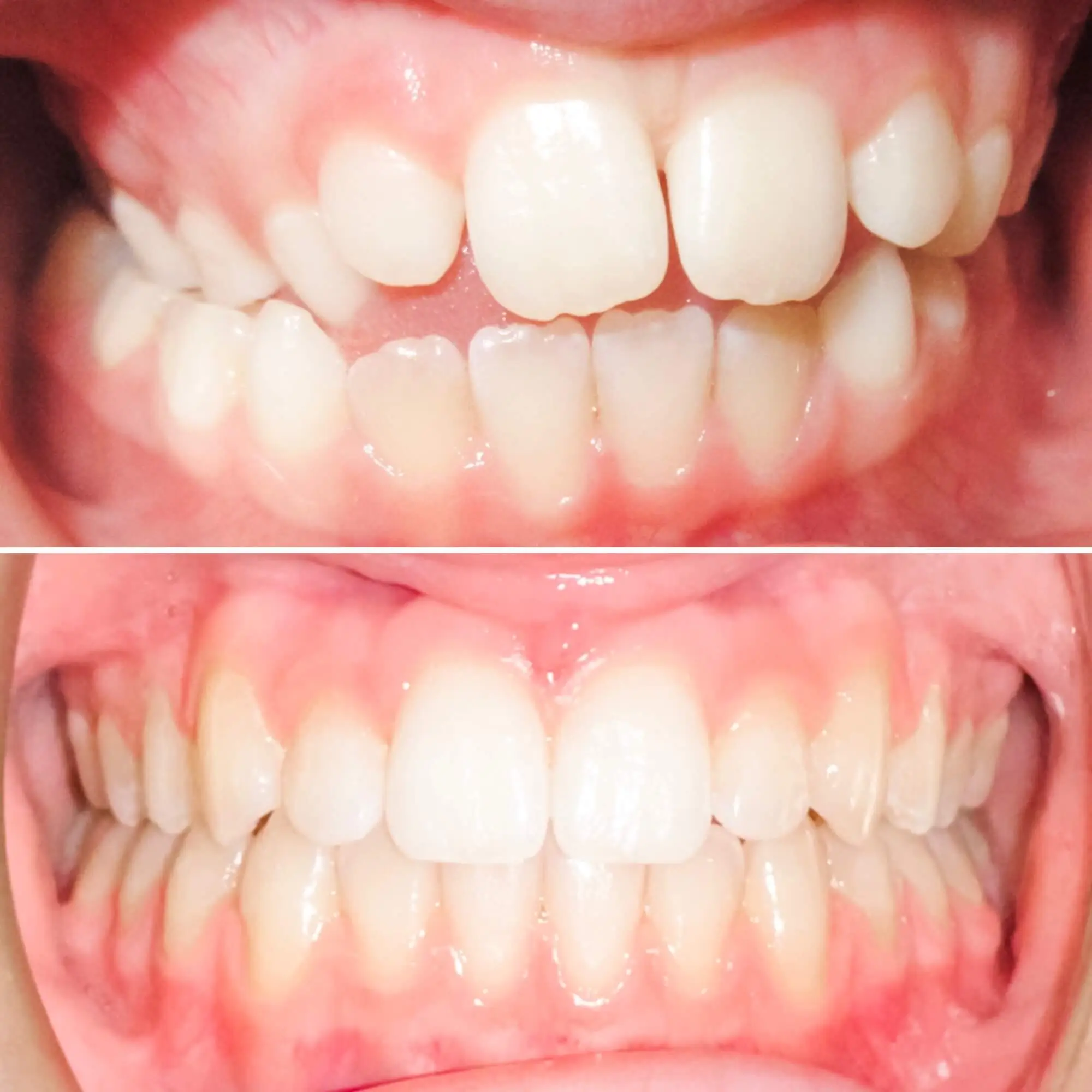
What is the difference between an anterior and a posterior crossbite?
In an anterior crossbite, one or more upper front teeth sit behind the lower front teeth. In a posterior crossbite, the upper back teeth sit inside the lower back teeth, on one or both sides.
An anterior crossbite is sometimes described as a front-tooth underbite; see What Is an Underbite and How to Treat It. A posterior crossbite can be caused by a narrow upper jaw. Both are described on Orthodontic Issues We Treat.
What are the signs of a crossbite?
Upper teeth that sit inside or behind the lower teeth when biting down are the main sign. A lower jaw that shifts to one side when your child bites is another.
Other signs include uneven wear or chipping of the teeth, jaw discomfort or clicking, difficulty biting, chewing or speaking, and a face or jaw that looks uneven. See Braces for Children for other signs that a child would benefit from a consult.
Why should a crossbite be treated?
A crossbite can cause uneven wear on the teeth and put stress on the jaw joints. In a growing child, it can cause the jaw to grow unevenly and lead to facial asymmetry.
Over time, the extra wear can damage tooth enamel and cause sensitivity or fractures. If jaw pain, headaches or clicking are a concern, see our TMJ Treatment page.
How do you treat a crossbite in children?
For a back crossbite, we widen the upper jaw with a palatal expander while it is still growing. For a front crossbite, treatment often involves clear aligners, and sometimes early treatment, to correct the teeth before the crossbite affects jaw development.
We offer a traditional fixed rapid palatal expander, the Invisalign Palatal Expander and the Angel Kid Aligner System, and Dr. MacKenzie recommends the one that suits your child. Expanders are most effective between ages 7 and 12. Treatment, including the time the expander stays in so the new bone can settle, typically takes 3 to 8 months. See Palatal Expanders.
When should a child with a crossbite see an orthodontist?
By age 7, as the Canadian Association of Orthodontists recommends, or as soon as you suspect a crossbite. Crossbites are easier to correct at a younger age.
If your child does not need treatment yet, we see them for free growth monitoring visits, usually every 12 months. See Treatment for Children (ages 6 to 10) and growth monitoring for kids.
Can teens and adults have a crossbite corrected?
Yes. Braces work for both front and back crossbites, and clear aligners can be a good option for mild crossbites.
Treatment may take a bit longer for adults. A significant skeletal crossbite, where the jaws themselves are misaligned, may need jaw surgery alongside orthodontic treatment, and we give non-surgical options to every patient who would benefit from treatment. See Treatment for Adults and Orthognathic Surgery.
How much does crossbite treatment cost?
Your fee depends on your treatment plan, and we go through it with you at your free consultation. We offer 0% interest monthly payment plans and direct bill most major insurance providers.
Low or no down payment options and pay-in-full discounts are available, and there is no tax on our payments. See Cost, Insurance, and Financing.
Noticed a crossbite, or a bite that shifts to one side? Book a free consultation in Saint John, Quispamsis or St. Stephen. It includes digital x-rays, clinical photos, a 3D intraoral scan and a personalized smile simulation, at no cost and with no obligation.