
What is spacing between teeth?
Spacing is gaps between the teeth, where the teeth do not sit side by side and touch. It can be a single gap between the two upper front teeth, which dentists call a diastema, or spaces between many teeth.
The teeth may be a little small for the jaw, the jaw a little large for the teeth, or a tooth may be missing. Our Orthodontic Issues We Treat page lists spacing with the other conditions we treat.
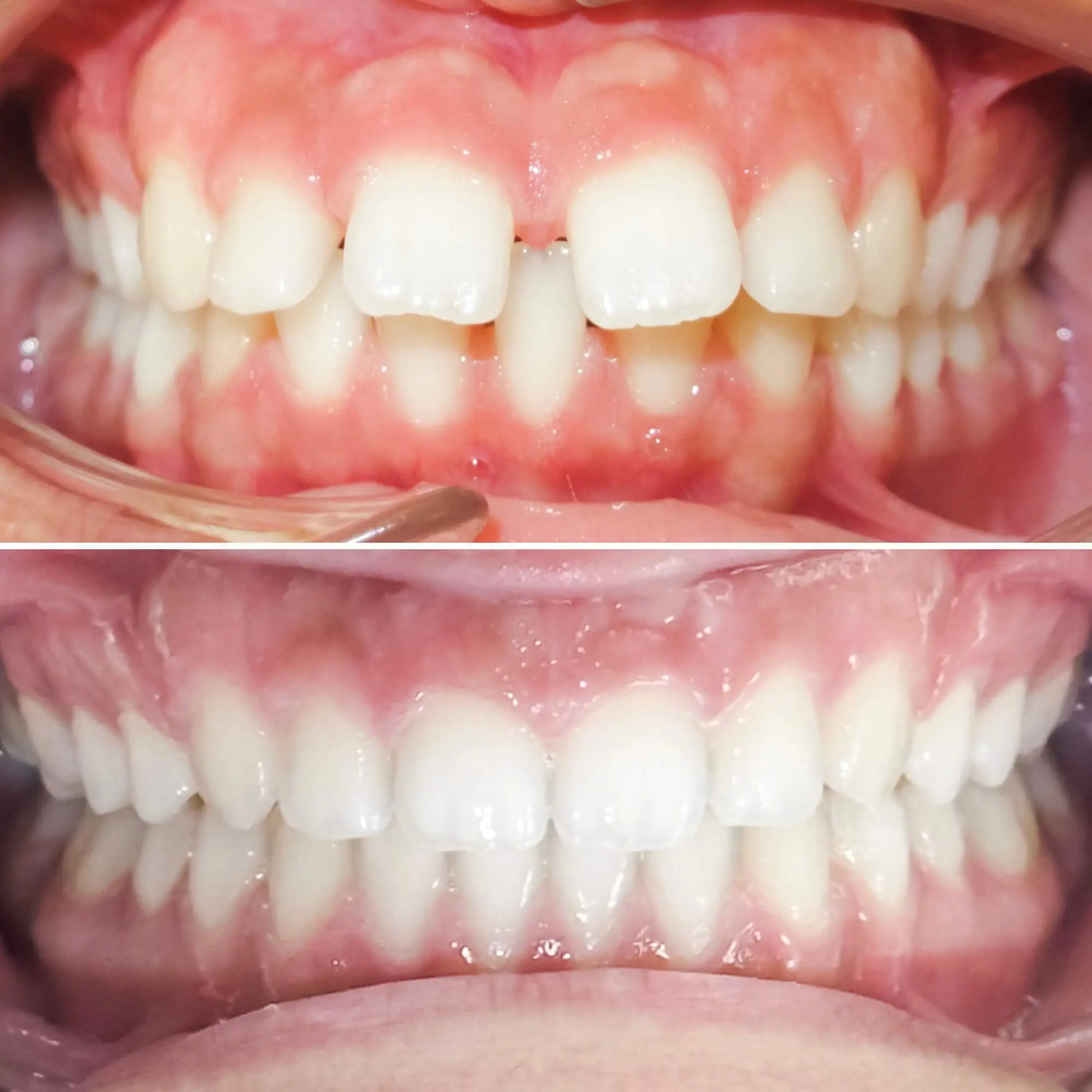
What causes gaps between teeth?
Gaps between the teeth can come from genetics, from missing teeth, or from habits such as thumb sucking. In many families, the size of the teeth and the size of the jaws simply do not match.
A tooth that never formed, or was lost, leaves a space that the neighbouring teeth drift into. In young children, persistent thumb sucking puts pressure on the front teeth and the roof of the mouth and can push the front teeth forward. Read Does Your Child Suck Their Thumb? What Parents Should Know.
Why should gaps between teeth be treated?
Gaps can affect how you bite and chew, and they trap food, which raises the risk of cavities. Wide spaces can also leave the gums exposed and open to injury or plaque build-up.
Spacing also changes the look of the smile, which is the reason many people ask us about it. See Braces for Children, which explains how braces correct severe crowding and spacing in children.
How do you close gaps between teeth?
We use braces or clear aligners, Angel Aligner or Invisalign, to close the gaps and bring the teeth into an even, balanced line. Braces and clear aligners cost the same at our practice, and Dr. MacKenzie recommends the one that suits your teeth and your bite.
Clear aligners are transparent shells, called aligners, that you wear 22 hours a day and take out to eat and to brush and floss. They can close moderate to severe spacing, not only small gaps. Most of our patients finish clear aligner treatment in 12 to 24 months. Afterwards, retainers keep the gaps closed, because teeth tend to drift back toward where they started, especially in the first year after treatment. See Braces, Invisalign and Clear Aligners and Retainers.
Can a small gap between the front teeth be closed quickly?
Often, yes. A mild gap between the front teeth, with no bite problem, can usually be closed with a short clear aligner touch up that takes 2 to 3 months.
Touch up treatment suits older teens and adults who have had braces before and whose teeth have shifted, and anyone with minor spacing and a bite that is otherwise fine. There is no upper age limit for orthodontic treatment provided your teeth and gums are healthy, and over half of our patients are adults. Read Invisalign Touch Up, Are you a Candidate for Invisalign Touch-Up? and Treatment for Adults.
What if the gap is from a missing tooth?
Missing teeth do not rule out treatment. Depending on the space and your bite, we can close the gap by moving the neighbouring teeth together, or hold and tidy the space so your dentist can place an implant or bridge.
Dental implants are fused to the bone and cannot be moved with braces or aligners, so any tooth movement near a planned implant usually happens first. We coordinate the order of treatment with your dentist. Read Can I Get Braces or Aligners With Crowns, Missing Teeth, or Gum Disease?.
When should a child with gaps between their teeth see an orthodontist?
By age 7. The Canadian Association of Orthodontists recommends a first orthodontic evaluation by that age, and early evaluation is always free at MacKenzie Orthodontics.
Small gaps between a young child’s front teeth are common and can close on their own as the permanent teeth come in, so most children are simply watched at free growth monitoring visits, usually every 12 months. At the first visit, a panoramic x-ray lets Dr. MacKenzie see whether any permanent teeth are missing before they are due to come in, and if a baby tooth is lost early, a space maintainer holds the space open so the adult tooth has room. See Treatment for Children (ages 6 to 10) and growth monitoring for kids.
How much does treatment for spacing cost?
Your fee depends on your treatment plan, and we go through it with you at your free consultation. We offer 0% interest monthly payment plans and direct bill most major insurance providers.
Low or no down payment options and pay-in-full discounts are available, and there is no tax on our payments. See Cost, Insurance, and Financing.
Noticed a gap in your child’s smile, or in your own? Book a free consultation in Saint John, Quispamsis or St. Stephen. It includes digital x-rays, clinical photos, a 3D intraoral scan and a personalized smile simulation, at no cost and with no obligation.